
LAND USE STRATEGY
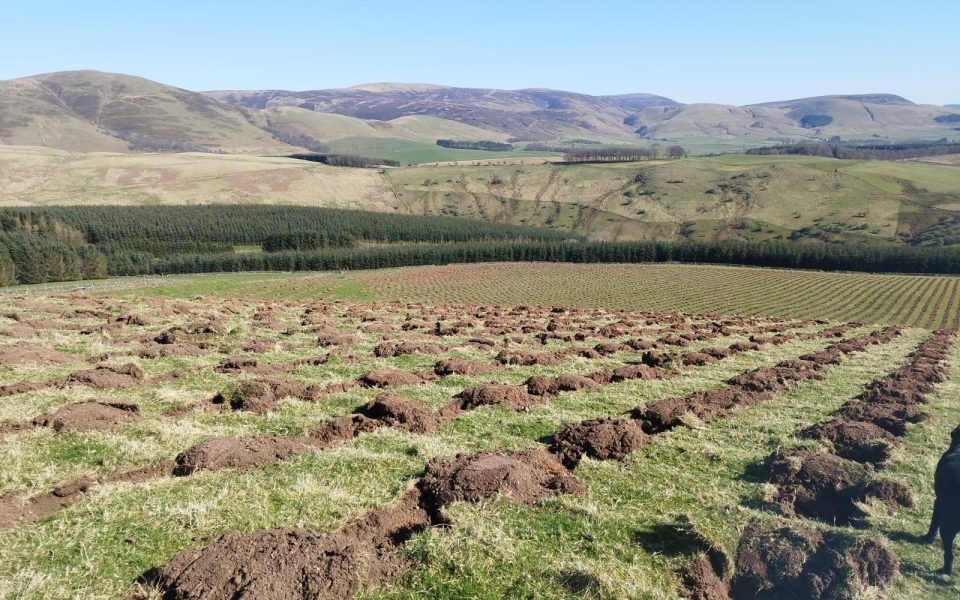
Following land use strategy discussions, an area of land at Coshogle was agreed as the location for a pilot restoration project in 2022.
Since being granted the requisite permissions, the team have since planted:
- 156 hectares (Ha) of productive conifers; that’s around 218 football pitches of trees, holding 436,000 trees in total
- 150Ha of native broadleaves, around 210 football pitches, holding 200,000 trees.
The native broadleaves also extend the linkage to the Coshogle Site of Special Scientific Interest (SSSI), enhancing this naturally special area and its habitat potential.

IMPROVED BIODIVERSITY
Cattle from neighbouring farms gently manage areas of open ground. Wearing no-fence collars, Belted Galloways and Galloways, both local breeds, are free to roam ensuring the environment remains natural, with little human intervention.
Over time, these areas will improve and be maintained, hopefully attracting species such as wader birds and, more specifically, curlews, which are on the Red List on the UK Conservation Status Report.
CARBON SEQUESTRATION
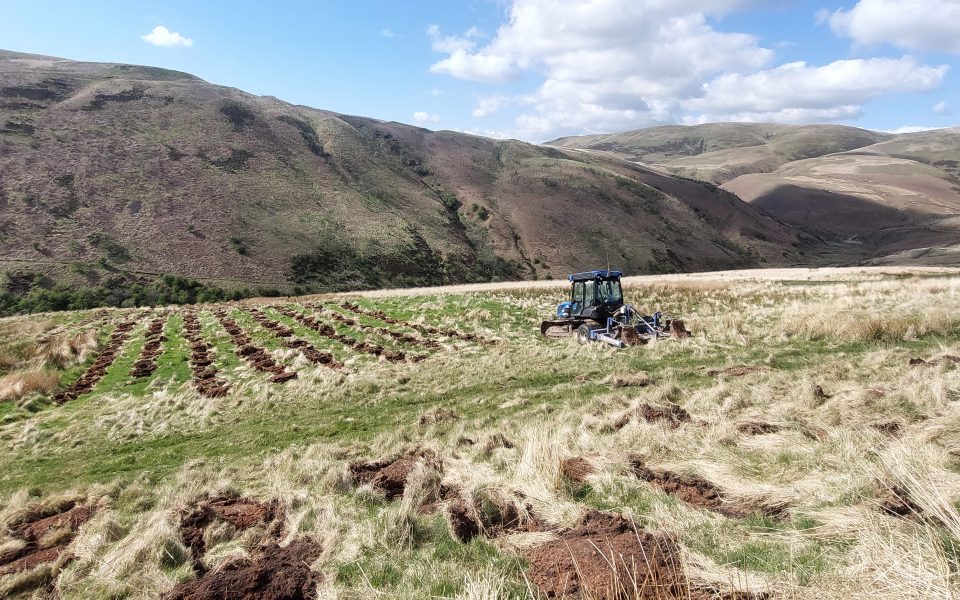
Together with peatland restoration across the site, the project aims to sequester a whopping 87,000 tonnes of carbon over the next fifty years, which will help offset carbon emissions from other parts of the business. The sale of the productive conifers, when the time is right, will contribute to the financial sustainability of the group.
This project is an excellent example of the land use strategy in practice; ensuring Buccleuch uses the land within its stewardship for the most beneficial outcome.